Showing posts with label France. Show all posts

Thursday, January 22, 2026

Masterclass on wines from the Loire valley


Annual ritual with wines from the Loire in London, organized by Charles Sydney Wines. This time we were led through a masterclass by Jo Locke MW, and the producers of the wines below. 


Here are my tasting notes.


1. Ackerman Royal 2022

Crémant de Loire, Saumur


In 1831 Mr Ackerman came from Belgium and wanted to copy Champagne, first to do in Loire.


60 Chard 30 cab franc 10 pinot noir check, 36 months on Lees 

Fresh, mod complex, 

Score 87


2. La Minée, cru château Thebaud 2022, first release

Muscadet cru communal 

Organic

 balance, complex 

Score 91


3.Les hauts de Husseau 2019,domain de la Taille aux Loups 

Montlouis sec AOP

Grapes? 

Dry vintage but very old vines (80 to 150 years old!) with deep roots got humidity from ground 

Spontaneous fermentation in deep caves, can take up to a year! No sulphites needed because little oxygen in caves. 

Smooth and balanced, mod long 

Score 90


4.Edmond 2022 Domaine Alphonse Mellot 

Sancerre blanc sauvignon 

Vines from 1904. Current Alphonse is 19th but he only has 4 daughters, first called Alphonsine! #biodynamic 

Balanced complex and long 

Score 94


5. Buisson Renard 2022,Domaine Didier Dagueneau

Balance complex and long, 

Vin de France and not Pouilly Fumé got fed up with regulations of appellation. 

Score 94


Reds


6. La Chapelle 2023,domaine des Pothiers Roman Paire) 

Côte Roannaise 

Gamay 

Spicy, smooth, long. 

Score 92


7. Génération XIX 2019, domaine Alphonse Mellot 

Sancerre Rouge Pinot noir 

Very smooth, perfect balance, long 

Score 95


8. Les Chiens Chiens 2018, Domaine de la Noblaie

Cabernet Franc 

Chinon rouge aop, organic 

Rough, sharp edges, needs time in the bottle to get a bit rounder. 

Score 90

Monday, November 4, 2024

Sparkling wines from Burgundy

Crémant de Bourgogne masterclass organized by Bourgogne Wines today with Laura Kent, proud Ambassador of this wine in London. CdB is well known, and considered by many (excluding producers of Champagne perhaps!) to be a more affordable alternative to Champagne. In this class we will try and determine if that is true.

The following is based on her presentation today, for which I am grateful.

For starters, some numbers: CdB represents 12% of the wine production of Bourgogne and this number is growing. Last year some 22m bottles were sold. By way of comparison, 61% of Bourgogne wine consists of the iconic chardonnay white wine and 27% is red and rosé.

CdB may be produced throughout Burgundy (and parts of Beaujolais) and its vines keep some 2800 hectares of vineyards busy growing grapes for 22m bottles, about 44% of which is exported.

The history of CdB goes back to the middle ages, to the 13th century to be precise, when the first mention appears for "effervescent" (frémillants) wines. But it is only in the 18th century, when bottling as we now know it becomes widespread, that natural effervescence, sometimes unintentional, becomes a common phenomenon and a new taste develops the the bubbles.

In 1818, with the Napoleonic wars over, wine production takes off again and specifically in the Côte de Nuits some of the finest cuvées are converted to sparkling production, most notably red!

In 1830 a certain François Bazille Hubert, a winemakers from Champagne, moves to Rully and starts the tradition of the classical method in Burgundy. Over the next one hundred years more and more vignerons follow his lead and in 1930 no less than 40 vineyards make crémant. 

In 1940, with the storm of war gathering in Europe, Simmonet-Fèvre and Moreau start making bubbles in Chablis. In March 1943, with the war in full swing, the appellation Bourgogne Mousseux in created. One would have to wait for another 30 years and in 1975 the appellation Crémant de Bourgogne is inaugurated for both red and white wines.

Strict control criteria are applied to the production of CdB, beginning with inspections in the vineyards and pressing centers, where a limit of 150kg for 100 liters of wine is applied. Grapes are harvested by hand with whole bunches. Quality control of the taste of the base wine follows and a second tasting of 100% of the final product is de rigueur as well.

Minimum of 9 months of aging on laths and 12 months after that prior to release.

Three categories differentiate the final product by quality: crémant, eminént (min 24 months on laths and another tasting) and grand eminént, the Formula 1 of CdB: a) only pinot noir and chardonnay are allowed (some gamay for the rosé); minimum 10% potential alcohol at harvest, only the cuvée (first 75% of press) is allowed; minimum aging is 26 months; wines must be Brut and the final product has to undergo yet another tasting.

And now let us go for some tasting ourselves.


Domaine Laurent Berger
Just 7 hectares of chardonnay in the mâconnais.
Almonds notes for a light yet balanced wine.
Score 82

Domaine manuel Olivier
25 hectares of chardonnay (50% of this wine), pinot noir and aligoté
A light wine
Score 80

Maison Louis Picamelot
Making sparkling wines since 1926
pinot noir, chardonnay and aligoté with some gamay
A dry wine, moderately complex, amaretto notes.
Score 84

Le Vignerons d'Igé
Making wines since 1927, now farms 190 hectares, mainly chardonnay.
A smooth fragrant wine with a final bitter touch.
Score 85

Maison Paul Chollet
Making CdB since 1955.
Concerto, a yeasty fragrant wine, balanced and moderately long.
Score 87

Maison André Delorme
Founded in 1942 in Rully.
A smooth wine with little effervescence.
Score 84

 Quatre-vingt-deux blanc de noirs
pinot noir and 20% gamay.
A balanced and long wine with unique cherry notes.
Score 89

Louis Bouillot
Crémant Eminent
Tradition here goes back to 1877 and now covers 140 hectares.
Another fragrant wine with good length and moderate complexity.
Score 88

Caves Bailly Lapierre
Crémant de Bourgogne éminent
Made from grapes collected from 400 growers
85% chardonnay and 15% pinot noir.
Good freshness, intense aromas of ripe cherries, long.
Score 91

Maison Albert Sounit
Established in 1943 and owned by a Danish family since 1993.
Crémanmd Grand éminent 2018
A creamy fragrant wine, very long.
Score 93


Wednesday, May 22, 2024

Old vine wines with Sarah Abbott

Sarah Abbott, co-founder of the Old Vine Conference,  led a unique presentation of wines from old vines at the London Wine Fair 2024.

Old Vine Conference is a London based non-profit dedicated to the promotion of wines made from vines with decades of history behind them.


This is hopefully a good thing in many ways. First of all, of course, old vines usually make harmonious, complex wines with great aging potential. 


Also, it is environmentally useful to maintain the genetic diversity of vines, and maintaining old vines reduces the chance that some varieties might get lost forever.


So what is "old"? for the OVC a vine is "old" when it is at least 35 years old, a rule apparently developed in Barossa, in Australia.


Here are my tasting notes:


1. Villa Bogdano 185 bianco, Veneto Italy, 2018

81yo vines of friulano

This vineyard was originally planted in 1943, and it is now farmed according to EU organic rules (bio).

Moderately intense and still good freshness. Good complexity and length. 

Www.villabogdano1880.it

Rrp £ 23, score 89


2. Garage wine sauzal lot 95, Maule valley Chile 2018, 

No recorded age, monastrell 

Origins shrouded in mystery but these vines were were already old when Nivaldo the owner was a child and HE is now old... 

Ripe cherries, good balance, complex, delicate, fragile, not concentrated as expected, mature now, don't wait any longer.

Www.garagewine.company

Rrp £ 19, score 88


3. Plaimont Manseng Noir, côtes de Gascogne 

Manseng noir variety, young vines re-planted from old vines material.

Vibrant light perfumed wine, floral notes, delicate tannins, might be best enjoyed cool.

Www.plaimont.com

Rrp £12 score 87


4. Marchelle Wines Cinsaut, Bechtold Winery, Mokelumne River, California, USA 2020 

Vines are a whopping 138-year-old!

Intense, elegant, perfect balance, complex, ready now with some aging potential.

Only 77 cases made grab one fast!

Www.marchelleswines.com

Rrp usd 54, score 92


5. Louis Martini, Gnarly vine, Monte Rosso Sonoma valley, 2018

100% Zinfandel

Like the previous wine, this also comes from a 138yo vineyard.

Intense ripe cherries, elegant, complex, perfect balance, long. An exceptional, harmonious wine.

Ready now could yet evolve some in bottle. 

Www.louismartini.com

Rrp £ 61 score 96


6. Once and future, Teldeschi vineyard "Frank's Block" in Creek Valley, Sonoma, 2019

Zinfandel

120yo vines for this fruity, balanced very long wine. Ready now but tannins could perhaps become a bit rounder with a couple of years in the bottle.

www.onceandfuturewine.com

Rrp usd 50, score 89


7. Catena Zapata Malbec, m mendoza, Argentina 

Vines 94yo and 28 yo

Www.catenazapata.com

Plump mature red fruit and also complex long 

Rrp £75 score 92


8. Feudi di San Gregorio, Serpico, aglianico, Campania Italy 2016 

Vines 100+ yo ungrafted

Www.feudi.it

Fruit, alcohol, tannins still very much alive. Hopefully time in the bottle will help harmonize this wine. 

Rrp £60,score 86


Join the Old Vine Conference if you agree old vines often make great wines!


https://www.oldvines.org/membership

Wednesday, January 24, 2024

Wines of the Loire Valley

Another informative trade tasting on the Loire valley organized in London by Charles Sydney Wines, a specialist on this region who is based in London.

Here are my notes from my favorite wines of the day. 


Alphonse Mellot


Generation XIX, Sancerre blanc 2020
The name indicates that this is a product of the 19th generation of wine producers in the Mellot family. Perfectly balanced oak-fermented sauvignon, mod long and complex. RRP £40. Score 93.

Edmond, Sancerre Blanc, 2020
A full bodied oak-fermented sauvignon,  very complex and long. A harmonious wine. RRP £45. Score 95.


Triple Zero (no sugar, no bottle fermentation, no dosage) pétillant naturel
Smooth and mod long, good value. RRP £13, Score 89

Remus Montlouis 2022
Blend of different plots, very smooth and long chenin blanc. RRP £15. Score 90

Clos Michel Montlouis 2022
Better balance than predecessor. RRP 16, Score 92

Clos de Husseau, 2022
Minerality emerges from this single plot wine. RRP 17, score 92


I also tasted several sweet wines, but to be honest I was not overly impressed, a bit too sweet and sticky. Here they are.

Château Pierre Bise Coteaux du Layon Rochefort 2022, RRP £11, Score 86

Château Pierre Bise Quarts des Chaue Grand Cru 2022, RRP £ 22.40, Score 85.

Domaine des Forges, Quart de Chaume Grand Cru 2021, RRP £19.70, Score 84


Wednesday, December 21, 2022

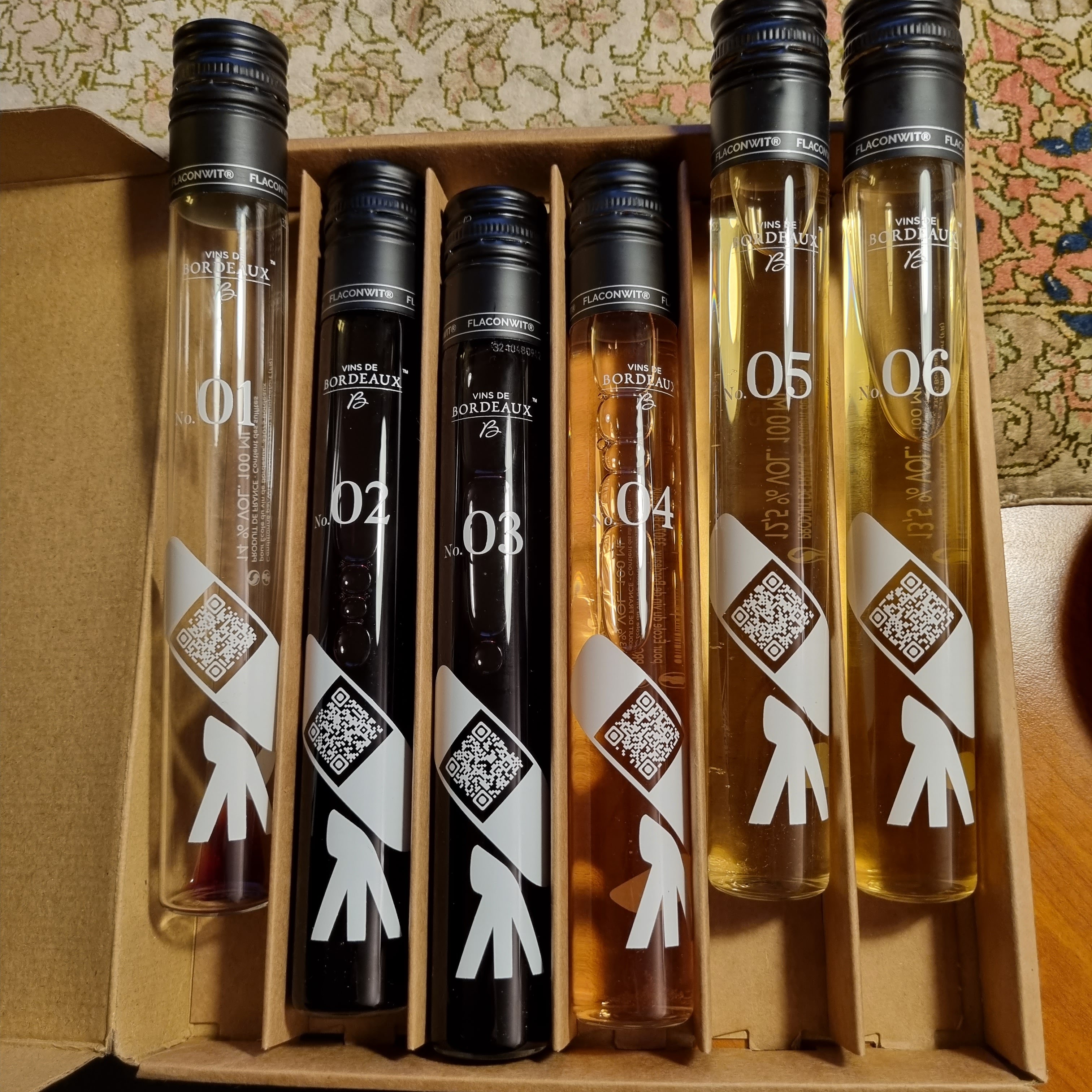
Bordeaux virtual master class and blind tasting

École du Vin tutors, Mike Turner and Leona de Pasquale took us through an introduction to Bordeaux.

By way of intro, we learned that Bordeaux is now 23% organic and % is growing.

Clairet can be seen as dark as Rose. Key differences between Rosé and Clairet are: Rosé: maceration normally for up to 12 hr or direct pressing Clairet: maceration 24-36 hrs Fermentation 18-20 °C and Clairet tends to go through MLF

They then challenged participants to a blind tasting to match the wines to their appellations before revealing their identities.

Leona de Pasquale was usefully on hand throughout the session to answer your questions in the chat box.

Here is what we tasted blind. I guessed two out of six right...

Wine n.1
Château Gaillard 2016 Saint Émilion Grand Cru
mod complex and long
merlot predominant 70%, 30% cab franc which still makes its presence strongly felt
50yo vines
aged in 225l barrels, one third new
14% abv

RRP £ 20-25
score 89


Wine n.2
Domaine Perganson L'Inattendu 2018, Haut Médoc
22% merlot, 23% cab sauvignon, 30% petit verdot, 18% malbec, 7% cab franc
aged 1 year in 225l barrels
still rough
avb 14.5%
RRP £ 14
score 84


Wine n.3
Clos du Notaire 2019 Cotes de Bourg
(CdBourg oldest vineyards in region, planted by Romans "Vitis Biturica"
merlot 100% organic, no barrel, no aging recommended
complex needs time to round out tannins
no oak and no sulphur
abv 15%
RRP £12-14
score 92


Wine n. 4
Chat La Freynelle 2020 rosé
100% cab sauvignon
20yo vines
direct pressing
Rosé made in whole of Bordeaux region, with many different soils and terroirs
short maceration method used to make rosé, a few hours max
fresh, strawberry
abv 13%
RRP £ 7-8
score 87


Wine n.5
Chat Haut-Rian 2020 Entre deux mères (two tides, comes from marée)
40% sauvignon blanc 60% semillon
35yo vines
4 months on lees
fresh citrusy
abv 12.5%
RRP £ 8-10
score 87


Wine n.6
Chat Faugas 2018 cadillac AOC
Semi sweet
late harvest
100% semillon
epoxy lined concrete
score 86
abv 13.5%
RRP £ 13-16
Score 88


Oenobordeaux App can be download for those who are interested.

Thank you Ecole du vins de Bordeaux


Monday, December 5, 2022

Masterclass on Lirac, Rhone Valley, by Jamie Goode

Jamie Goode explains Lirac
I confess I did not know much about Lirac until today. In fact, I am not sure I remember the last time I tasted a glass from this hidden gem, a real secret in the vast panorama of wines from the warmer regions of southern France. 

So I was ecstatic to accept a gracious invitation by the UK Sommelier Association to participate in a masterclass organized in cooperation with Cru des Côtes du Rhône and led by well known wine blogger Jamie Goode. Here below what we learned today, followed by my tasting notes.

Some numbers to keep in mind: In 2020 87% Lirac's production was red, 10% white and 3% rosé. The average annual yield is 24 hl for each of the 818 hectares in the whole Lirac AOC which lies immediately to the west of the Rhone river, just across the water from the famous Chateauneuf du Pape. Just over 20,000 liters produced, with some 40% exported.

Winemaking in Lirac goes back hundreds of years, and when the pope set up court in nearby Avignon in the XIV century they apparently appreciated it already! Closer to our days, it was in 1947 that the Lirac AOC (appellation d'origine contrôlée) was created as a cru of the Rhone Valley.

The climate benefits from a strong Mediterranean influence (2700 hours of sunshine per year) even if the sea is nowhere to be seen in Lirac.


Here below my tasting notes. All these wines are, in my opinion, ready now but the top of the range at the end of the tasting might benefit for a couple of extra years in the bottle.

Domaine des Maravilhas, Pradau 2019
Bourboulenc, Grenache blanc, 12.5%abv, 35+yo vines
Wild fermentation, 18mos in concrete and 12% in small oak
Fresh and fruity with pronounced minerality. RRO £ 12
Score 87

Château d'Aqueria 2021
Grenache blanc, bourboulenc et al for a stunning 14%abv
Balanced, notes of mint and almond, with a pleasant bitter end. RRP £ 11
Score 89

Les Closiers Lirac 2021
Grenache noir, syrah, mourvedre, 14%abv
Own label by M&S, liquorice, aniseed, moderate balance. RRP £ 11
Score 85

Domaine Giraud, Les Sables d'Arène 2021
Grenache, syrah, mourvedre, 15%abv
Organic production for a plump fruity wine with a pronounced sensation of pseudo-warmth given by the high abv. Old vines. RRP £ 17.50

Château de Ségriès 2018
Grenache, syrah, cinsault, mourvedre, 14.5%abv
A "new world" sort of wine: lush and exuding tons of ripe fruit, complex with round tannins. RRP £ 21
Score 92

Domaine dArbousset - La Vigne d'Yvon 2017
Grenache, syrah, mourvedre, cinsault, 15% abv
A balanced, jammy wine with moderate length. RRP £ 12.85
Score 88

Château de Montfaucon - Baron Louis 2016
Grenache, syrah, carignan, cinsault, mourvedre
Pepper and earthy aromas, balanced and mod long. RRP £ 16.27 (cute RRP)
Score 90

In conclusion: is Lirac another Châteauneuf du pape? Yes and no. Jamie said it could be: same grapes, same climate, same soil. Yet you probably won't find the world class bottles that one can buy on the other side of the river. Can you get excellent quality for your money? Definitely yes. If quality continues to improve, I would not be surprised that prices would rise substantially from current levels and begin to close the gap with their bigger brothers we all know.


Map by Larousse, click to enlarge


Monday, June 13, 2022

Meet the producer: Vignobles Chatonnet, Bordeaux, France

A new discovery for us this producer from the right bank in Bordeaux. The homeland of merlot, one of my favorite grapes, mellow yet powerful, velvety and structured. A touch of elegance in many Bordeaux wines from either bank, but a protagonist in Lalande de Pomerol, where the vignobles Chatonnet is based. 

Today we met with Andrea Giraud who is in charge of the international market at Paul Chatonnet. We asked about the peculiarities of this vineyard. Let's hear it directly from her.


Tasting notes:

A typical expression of this noble variety. Opulent, elegant, complex and long. A masterpiece merlot, at the pinnacle of rive droite interpretation of this grape.
Result of "lutte raisonnée", aiming at minimizing human intervention as much as possible but without ideological strictures.
Score 97

An original composition with the unique addition of malbec instead of the more familiar cab franc which is the normal third party of the Bordeaux trinity. The result is a balanced and moderately complex wine that is ready now but could wait a little longer.
Score 95

Away from the camera we also tasted:

Haut Chaigneau 2016, merlot 90%, cab franc 10%
Dark Ruby red, intense nose of red fruits
Fresh for a 2016, could use a few more years to round its edges but already balanced enough to be highly enjoyable with structured food. I had it with lasagne.
Score 89


Wednesday, November 24, 2021

Walkaround and masterclasses of Vouray, Loire Valley, France

Most interesting tasting today in London, focussed on wines from Vouvray and their iconic chenin blanc variety. Well organized by Vouvray producers and Sopexa.


Master class n. 1: Vouvray Sparkling wines


1. Couvée Privilège, Domaine du Margallau 2014
Mineral, fresh, dry, 2g dosage. Steel only, 48 months on lees, aging potential. I see this as an aperitif, it is too dry for anything else. Score 85

2. Feuilles d'Or, Domaine Herivault, biodynamic, 2012
Also mineral but rounder finish, better balance. Score 86

3. les temps d'Aimé, Dom Aubert NV
Intense nose, mod balance. Score 82

4.Chateau Gaudrelle extra brut 2014
Balances wine, mod complex, very dry, NO residual sugar. Score 86

Overall an interesting discovery of relatively lesser known sparkling wines from the Loire.


Master class n. 2: Vouvray and cheese


It was a lot of fun to try and pair the cheeses you can see in the picture, which ranged from blue to mid-aged one and were all from France except Gorgonzola. There are countless possible combinations, and in the end it is a matter of taste to pair by contrast (e.g. acidity of the wines and fat of the cheese) or concordance (e.g. sweetness of both wine and cheese).

My favorite of the above lineup was n.5, Champalou les Fondreaux 2018, a sweet wine that maintained adequate acidity, made with only natural yeasts, picked late with no added sugar, which paired with most of the cheeses on my plate! Score 86

I was personally surprised at how well the sparkling wine, contrast-paired with Gorgonzola.

The other feature which emerged this afternoon is the high degree of versatility of Vouvray chenin blanc, which allows for a wide range of possible pairings depending on vinification.

Prices for all above wines between 13 and 16 euros FOB.

Kevin sharing his wisdom


Tuesday, November 9, 2021

Twelve producers from Occitanie

Another tasting in London about Occitanie, the region of France that was created on 1 January 2016 from the fusion of former regions of Languedoc-Roussillon and Midi-Pyrénées. This is an administrative region, it does not change the classification of the wines.

Thank you to Isabelle Kanaan and Sébastien du Boullay of "Maison de la Région Occitanie - Sud de France" in London for organizing this event.


Besides a walk-around of dozens of wines from 12 producers, there were two most interesting masterclasses today, both led by Matthew Stubb MW.

Masterclass: Occitanie outside the box


1. Terroirs d'Occitanie, baron Ermenegaud, AOP Fugères 2020
50% Roussanne, 20% Marsanne, 20% Vermentino, 10% Viognier
Scisty soil, very poor, roots have to go deep to find nutrients.
A fresh wine (from Vermentino) with floral notes. Honey suckle, jasmine, peach. A complex wine with a long finish. Score 88.

2. Les Vignerons Castelas, Vieilles Vignes, AOP Cd Rhone Sinargues 2018
40% Grenache noir, 40% Syrah, 20% Carignan
Red and black fruits, spicy, peppery notes, good substance (matière!). Good balance, smooth finish. Score 89

3. Domaine de la Louvière, La Sèductrice, AOP Malepère 2019
60% merlot, 20% Cab franc, 20% malbec
Super smooth wine, merlot clearly overwhelming, probably more than 60%
Very ripe fruit, green pepper, herbaceous notes.. Score 82.

4. Les Vignerons du Brulhois, le Vin Noir, AOP Brulhois 2017
50% merlot, 30% tannat, 15% cab sauv, 5% malbec
From the northern part of the region, closer to Bordeaux. medium-strong tannins, probably from tannat. A simple simple but pleasant wine. Score 80.

5. Vignobles Vellas, Domaine Valinière "Granmarone", AOP Languedoc St Drézéry 2019
Syrah, Grenache, Mourvèdre
The name wants to indicate that this is done in "Amarone style", though the grapes are dried on the vine, unlike Amarone. Fermentation for four months, no wood, aged in concrete for one year. An impressive deep color, intense nose and plump, complex and long in the mouth, a touch of sweet at the end. Score 93.

6. Domaine F. Jaubert, Or du Temps, AOP Rivesaltes 2002
70% Grenache gris, 30% grenache blanc
Fortified wine, they added 96%abv to raise wine to 17%abv. Domain started using this technique in the XIII century, before fortification started in Porto, Madeira or Marsala. Dried fruit, caramel, toffel. Aged 17 years in concrete, NO WOOD. About 85g residual sugar. Score 88.


Masterclass: Local grapes and distinctive taste of Occitanie


1. Maison Sinnae, Eléments Luna, AOC Côte du Rhone Villages Laudun 2020
65% grenache blanc, 35% clairette
Citrus and peach follow a floral welcome to the nose. A delicate wine despite 14.5% abv. Waxy notes, no oak, steel only. Score 84

2. Domaine Lalaurie, marselan, IGP Pays d'Oc 2020
100% marselan
This grape is a cross between cabernet sauvignon and grenache. Produced in the early 1960s, it has become popular in Languedoc and more recently in China because of its resistance to mildew and small berries which result in lower yields. Aromatic wine, red and black fruits, licorice, spicy. Medium tannin. Score 84

3. Domaine Gayrard, Braucol, AOP Gaillac 2019
100% fer servadou (braucol)
Smooth, medium body and balanced wine, herbaceous notes. Lacks complexity and length. Biodynamic. Score 82

4. Les Domaines Auriol, Influences naturelles, IGP Pays d'Oc 2020
syrah 100%
Smooth, medium body, crunchy and vibrant fruit. Not a complex or long wine but pleasant nonetheless. Biodynamic. Score 82.

Before the masterclass I had tasted their Chant de l'âme 2019 a blend of syrah, carignan, mourvèdre and cinsault: a complex, round and long wine ready now. Score 92

5. Domaine Guillaman, Gos manseng, IGP Côtes de Gascogne 2020
100% gros manseng
Semi-aromatic wine, smooth and med long, not complex. Sweetness prevails with 35g of residual sugar, only 11%abv. Score 83

6. Domaine Tariquet, Dernières Grives, IGP Côtes de Gascogne 2018
100% petit manseng
beautiful deep golden yellow for this aromatic sweet wine. Yet one can easily pick a vibrant acidity that makes for a well balanced product. Honey, tropical fruits (mango?). It is a late harvest wine but without botrytis. 100g residual sugar. Score 93.